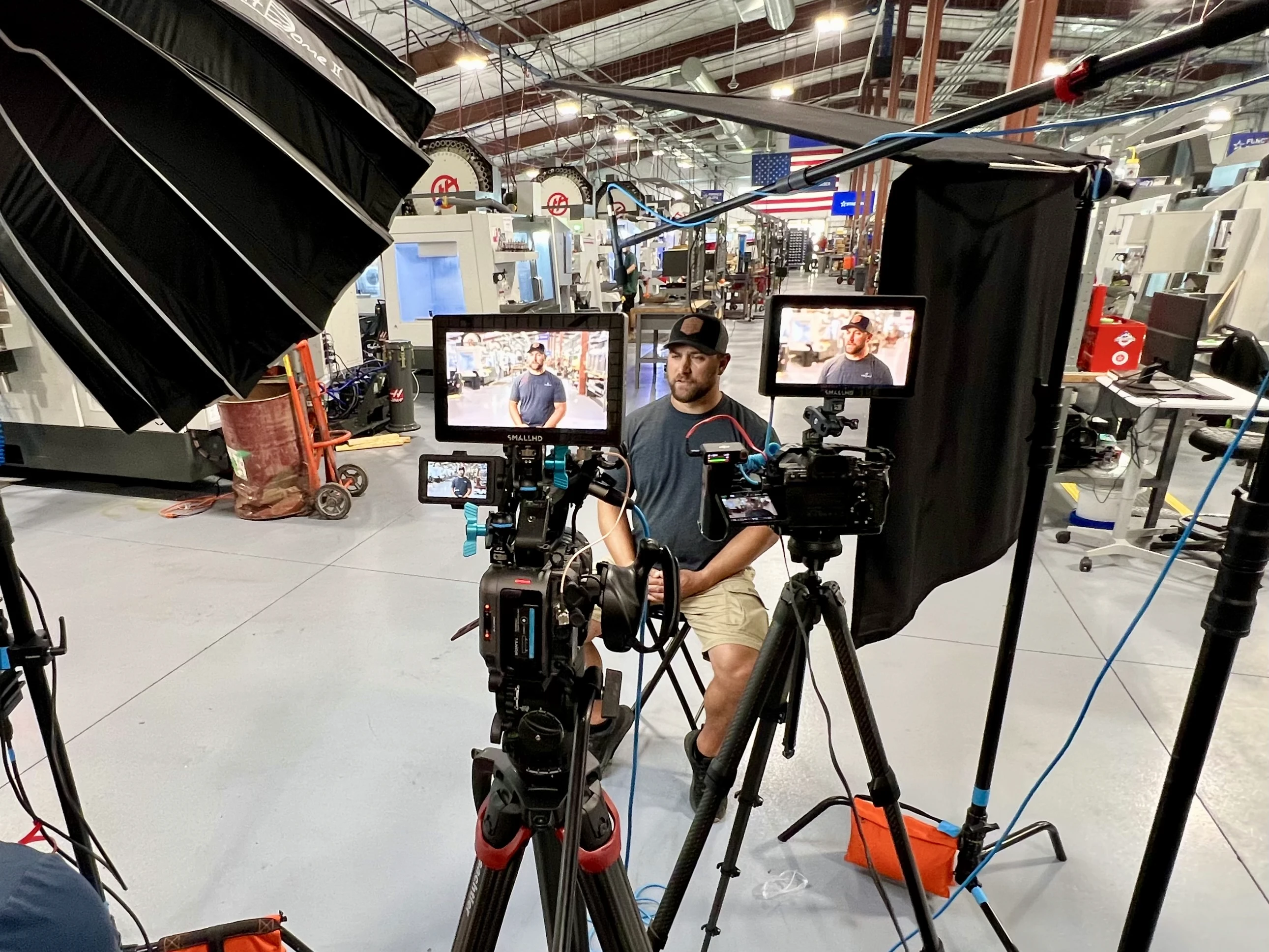
Walk into any Austin office park, factory floor, or downtown coworking space and you'll find a 2-minute corporate video that someone paid $25,000 to make in 2021.
It looks great. Drone over the building. Slow-motion shot of a handshake. A CEO talking earnestly about "innovation" and "people-first culture." Cinematic color grade. Music swells. It checks every box your brain associates with "professional video."
And it has not moved a single deal, hire, or dollar since the day it shipped.
The trap
The pretty-video trap goes like this. A marketing leader, a founder, or an operations VP decides the company needs a brand video. They look at production reels online. They pick a vendor whose reel they like. The vendor sends a quote, asks for a shot list, executes the shoot, delivers a polished edit. Everyone says "wow."
And then nothing happens.
The video gets posted to the homepage. It sits there. It gets emailed to a few prospects. It gets played at a board meeting once. A year later, the homepage gets redesigned and the video gets quietly removed. No one ever measured whether it contributed to a single business outcome — because the project was never built to do that.
This is the most common video failure mode in Austin
It's not a creative problem. The video is fine. The cinematography is fine. The edit is fine.
The strategy never existed.
The Content Marketing Institute's Manufacturing Content Marketing Benchmarks, Budgets, and Trends: Outlook for 2025 found that 66% of manufacturing marketers say creating content that prompts a desired action is a challenge. Only 20% rate their content strategy very effective. 47% say their strategy isn't tied to the customer journey. That's what the pretty-video trap looks like when somebody actually measures it.
66% of manufacturing marketers say creating content that prompts a desired action is a challenge. Only 20% rate their content strategy very effective. CMI / MarketingProfs, Manufacturing Content Marketing Benchmarks, Budgets, and Trends: Outlook for 2025
What strategic video actually looks like
The difference between a brand video and a strategic video isn't budget. It isn't even production value. It's whether the project starts with the answer to a specific question:
What business decision does this video have to influence, and how will we know if it worked?
That single question rewires the entire production. Suddenly:
- The audience is named. Not "potential customers" — a specific buyer persona at a specific stage of the cycle. A Series A investor reviewing committee materials. A skilled-trade candidate scrolling LinkedIn at 11pm. A foundation program officer reviewing renewal materials.
- The action is named. Schedule a call. Apply for the role. Forward the link to a partner. Approve the grant renewal. Not "engagement" or "brand awareness."
- The deployment is named. Embedded in the post-meeting follow-up email. Featured on the careers page above the bullet list. Played live at the gala close. Not "we'll figure that out after delivery."
- The measurement is named. Application rate lift. Time-to-fill. Cold-to-meeting conversion. Donor-acquisition cost. Not impressions or vanity metrics.
If you can answer those four questions before you shoot a single frame, the resulting video almost can't fail. If you can't, no amount of cinematography will rescue the project.
Why this is hard in practice
It's hard because production companies don't get hired to do strategy. They get hired to make video. The economics of the industry reward shooting days, not thinking days. Even when a vendor genuinely cares about outcomes, the proposal usually looks like this: pre-pro, shoot, post, delivery. No line item for "what is this video actually for."
And on the client side, the strategic question is uncomfortable. It forces a clarity decision that the brand team or the founder hasn't fully made yet. "We want a brand video" is easier than "We need a film that will compress our enterprise sales cycle for the Tesla supply-chain RFQ pipeline." The first one is a project. The second is a position. Positions are scary.
So most Austin brand projects pick the easier path. And then nobody understands why the resulting video did nothing.
What changes when you start with the business question
We've watched the same shoot-day budget produce wildly different outcomes depending on whether the strategic frame existed.
Same crew, same camera, same editor. One client made a 90-second founder narrative that was used as a story asset across multiple equity-crowdfunding rounds that collectively raised $13.7M because the brief specified "investor-facing fundraising asset, deployable in StartEngine campaigns and post-meeting follow-up." Another client made a 90-second founder narrative that lives on a Vimeo page and has never been used because the brief specified "tell our story."
The first one had a job. The second one had a vibe.
The questions to ask before you greenlight the next video
- What specific business decision does this video have to influence?
- Who, exactly, is the audience — and where are they when they watch it?
- What action do you want them to take after watching?
- Where will the video live, in what sequence with other touchpoints?
- What metric, 90 days from now, will tell us whether it worked?
If your production vendor doesn't ask you these questions before sending the quote, you're not buying strategic video. You're buying pretty video. And pretty video doesn't grow brands.
About this post
Written by StoryChef Media, an Austin video production company that works with founders, manufacturers, and mission-driven organizations across Texas. Every project we take on starts with a Storyfinding session — the strategic frame that decides whether the video will earn its place in the deck, the campaign, or the careers page. If your next video needs to do real work, the next step is a 15-minute video strategy diagnostic.