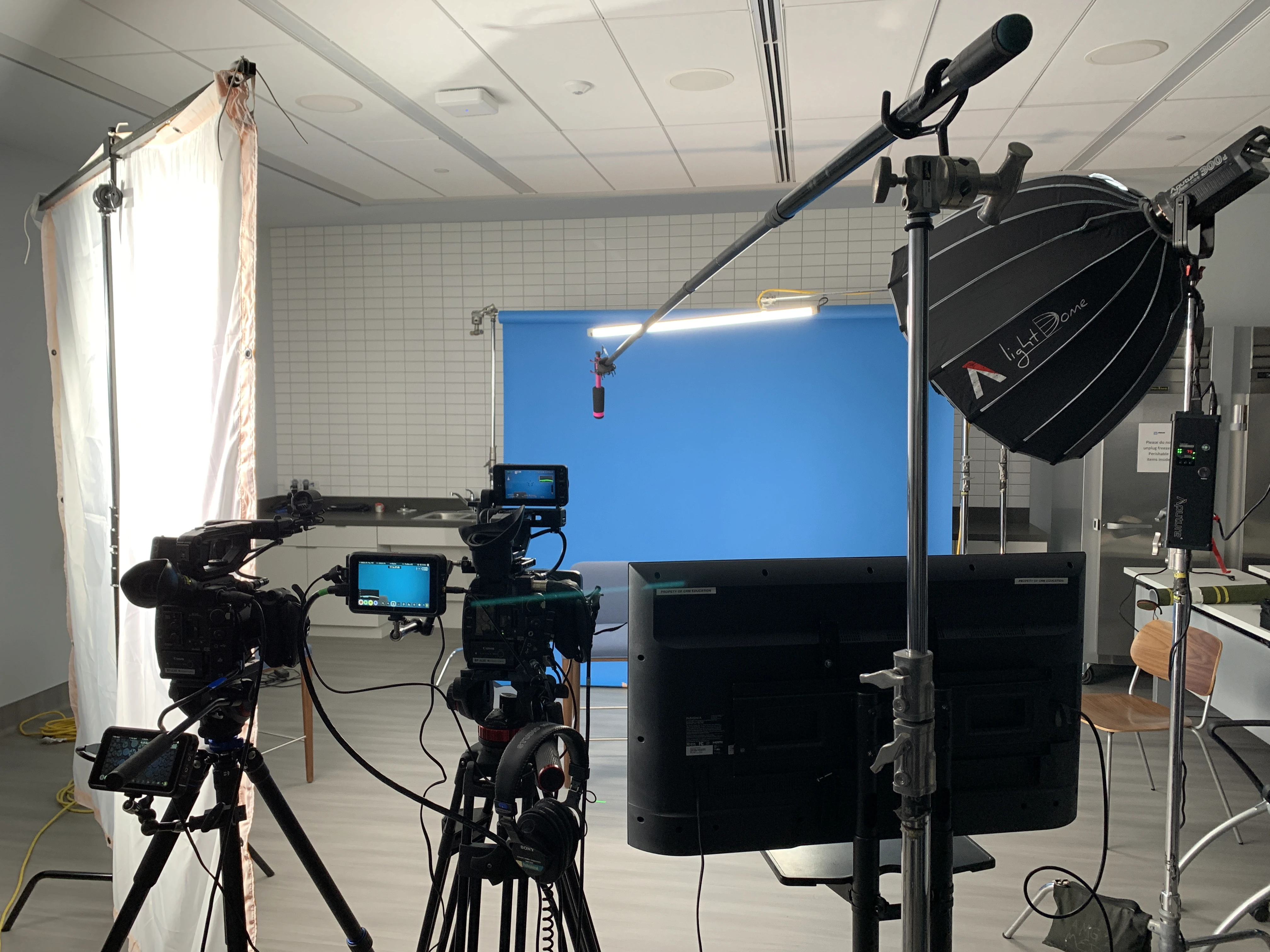
If you have ever searched for "video production company in Austin," you have seen what most people see: a wall of similar-looking portfolios and similar-looking websites. Cinematic reels, smiling teams, the same drone shots of the same buildings. It can be hard to tell, on the surface, who is genuinely going to move your business and who is just selling video.
The difference rarely shows up in the equipment list or the day rate. It shows up in how a company thinks. The best partners lead with questions, not proposals. They want to know what the video is supposed to do before they pick up a camera.
Per HubSpot's content research, short-form and long-form video continue to drive the highest ROI of any content format. That is the easy part — most marketers already know video works. The harder, more expensive question is which video, made by whom, for which decision in your business.
What most companies get wrong about evaluating video companies
Most businesses evaluate production firms like they would a design agency: compare portfolios, compare prices, compare aesthetics, pick the one whose work looks the best. That is a reasonable instinct, and it is also why so much corporate video underperforms.
The aesthetic question is downstream of the strategic question. Before you can usefully compare reels, you have to know:
- Where will the video actually live, and who will see it?
- What action do you want a viewer to take after watching?
- How does this video connect to the rest of your sales, recruiting, or fundraising effort?
- How will you know whether it worked?
The best Austin video production companies lead with those questions. They will not send you a quote until you have at least roughed out the answers together. Companies that respond to "we need a video" with a price list are selling deliverables, not outcomes.
The criteria that actually matter
When you are comparing real options — not just gathering quotes — five dimensions tend to predict the relationship better than anything on the reel.
1. Strategic thinking
Do they ask discovery questions before writing a proposal, or do they wait for you to hand them a brief? The first kind of partner usually saves you from the wrong project. The second usually executes the wrong project beautifully.
2. Range of work
Look across their portfolio for variety in content type, not just in cinematography. Can they do a tight social cut, a long-form documentary, a recruiting reel, and a live broadcast — and do them all credibly? Or is every project on the reel basically the same brand film with different logos? Range signals adaptability. Sameness signals a template.
3. Communication and reliability
Most projects do not fail in production. They fail in the gaps between people — between the client and the producer, between the producer and the editor, between deliverables and deployment. Ask how many people will actually touch your project, who your day-to-day contact is, and how they handle the inevitable schedule or scope wobble. Calm, specific answers beat polished, vague answers.
4. Process
A real production company has a documented process — discovery, pre-production, shoot, post, delivery, review — and they can describe it without flipping through a sales deck. Scope management lives inside the process. So does revision policy. If a vendor cannot tell you what is in scope and what is out of scope, neither can your CFO when the invoice arrives.
5. Client retention
Repeat business is the most honest signal in this category. Anyone can ship one good project. The companies worth hiring are the ones whose clients come back two and three projects later. Ask how many of their clients are on a second or third engagement.
The questions that reveal the most
If you are interviewing potential partners, these are the questions that tend to draw out the difference between a strategic shop and a commodity shop:
- How do you start a project? What does discovery look like?
- Walk me through a project that did not go as planned. What did you do?
- If our budget is tight, where would you tell us to spend it — and where would you tell us to spend less?
- Who on your team will actually be in the room with us, and who runs post?
- How many revision rounds are included, and how do you handle scope expansion?
- What does "delivery" mean to you — a master file, a deployment toolkit, something else?
Pay attention not just to the answers, but to how comfortable the vendor is talking about the messy parts. The best partners are honest about constraints. The weakest ones are uniformly enthusiastic about everything.
Matching the company to the type of video you need
The "best" Austin video production company is not a fixed answer — it depends entirely on the project you have in front of you. A few common project types and what each one demands of a partner:
- Brand film. Needs a partner who can hold a narrative line for 90 seconds to three minutes without it drifting into mood-reel territory. Asks: can they tell a story, not just film one?
- Commercial / paid-distribution work. Needs a partner with broadcast and CTV experience, a clear understanding of how the asset will perform in paid placement, and post discipline.
- Nonprofit and mission-driven films. Needs cultural literacy as much as cinematography. The wrong tone can cost you the donor base you were trying to grow.
- Live event capture and streaming. Different specialization entirely. Asks: can they execute under time pressure with multiple inputs and zero second takes?
- Explainer and product video. Needs a partner who can translate complex business logic into plain-language structure without making it feel like a textbook.
Match the company to the project. A studio that excels at brand films is not necessarily the right choice for a four-camera live broadcast, and vice versa.
What to watch out for
The red flags worth taking seriously:
- They lead with selling, not listening. If the first call is mostly the vendor talking about their reel, the relationship has already started the wrong way.
- They quote without asking enough questions. A serious quote requires a real understanding of the project. A fast quote often signals a templated scope.
- The team you see in the sales process is not the team that shows up on shoot day. Ask early who will actually be in the room. Senior creative on the pitch, juniors on the project is a common pattern worth flagging.
- No clear revision policy or scope language. Either of these missing is a setup for the uncomfortable invoice conversation later.
The right fit is rarely the cheapest option
This part is uncomfortable to write because it sounds self-serving, but the data backs it up. Cheap video tends to be expensive video, eventually. The most common pattern: a business hires the lowest-cost vendor for a "starter" project, the resulting asset does not perform, and the same business hires a better vendor twelve months later to do the project properly. Two budgets spent to get one outcome.
Strategic partners charge premiums that reflect the strategic value of what they deliver — not just the camera and the editor. If the price is the only line you are evaluating on, you are almost guaranteed to pick the wrong partner for anything more ambitious than internal documentation.
Frequently asked questions about Austin video production companies
How much do Austin video production companies typically charge?
Entry-level project work tends to start in the $500 to $2,500 range — short social cuts, internal video, basic event capture. Strategic brand and recruiting work typically starts at $5,000 and runs to $25,000+ depending on scope, talent, and shoot complexity. We wrote a longer pricing guide if you want the full breakdown.
How long does a typical Austin video production project take?
For a standard brand or recruiting video with proper pre-production, plan on four to eight weeks from kickoff to delivery. The pre-production phase is usually where projects get compressed first; resist that. The pre-production phase is where the strategy lives.
Should I hire a local Austin company or a remote agency?
Both can work. Local Austin companies bring market knowledge, faster response times, and easier in-person collaboration. Remote agencies sometimes offer specialized expertise or lower rates for narrowly scoped work. If your project requires shooting in Austin or in Central Texas, local is almost always the better answer.
How do I prepare for an initial conversation with a video production company?
Come ready to talk about what the business is trying to do, who the audience is, where the video will live, and what success would look like ninety days after delivery. You do not need a brief or a shot list — those should be built together. You do need clarity on the outcome.
About this guide
StoryChef Media is an Austin video production company that has been building strategic video content for clients across tech, real estate, manufacturing, and nonprofits. If you want a direct read on what your specific project should look like — strategic frame, scope, budget, deployment — the next step is a 15-minute video strategy diagnostic.